For Realms / Oddin

elegant.work
studio.elegant.work
Ben
Mimir

A small portfolio for the Realms conversation: one commercial practice, one diagnostic app, one product experiment that started as a pet, and the operating setup behind them.

01 elegant.work

A commercial surface for the way I diagnose and repair systems.

02 studio.elegant.work

A local diagnostic workflow that turns a website into a first report.

03 Ben + Mimir

The fun project, and the back office that made it possible to build fast.

The work

The four artifacts.

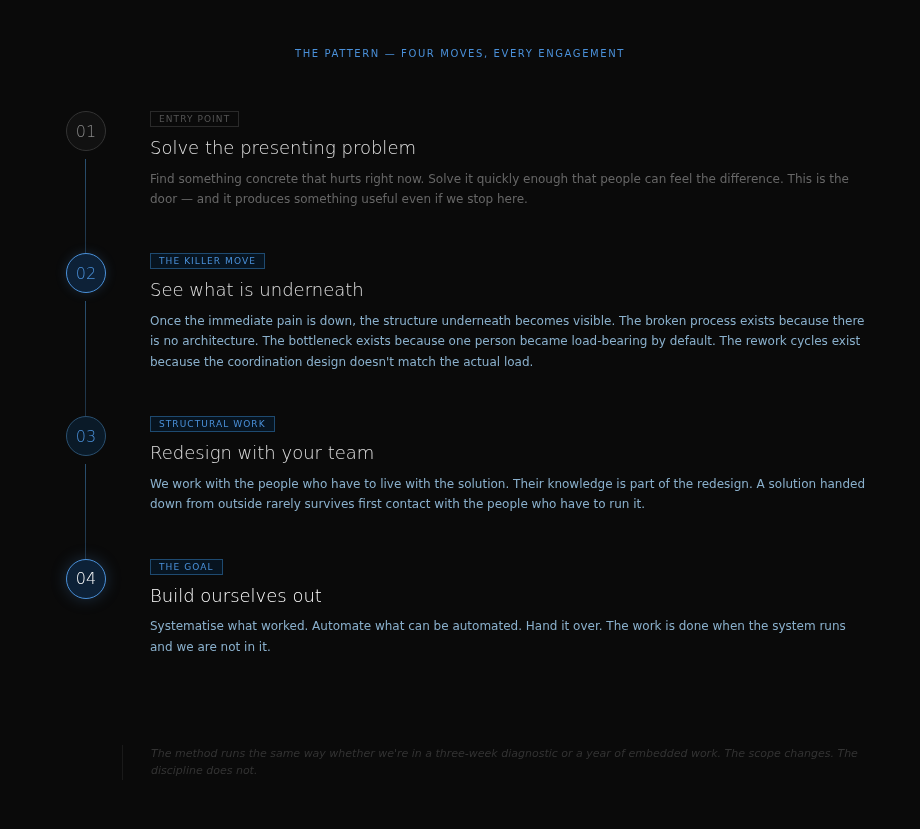
elegant.work four-move operating sequence
elegant.work: the operating pattern underneath the offer.

01 / elegant.work

Turning a large worldview into something a buyer can actually enter.

The live work is a sharper commercial surface for my own practice. Broad systems thinking is cheap to admire and hard to buy. The useful move was to make the entry point smaller: visible pain, first repair, upstream cause, cleaner operating pattern.

Some of this is staging work and will land on the public site in the coming days. I am including it because it is closer to the actual thing than the older live page.
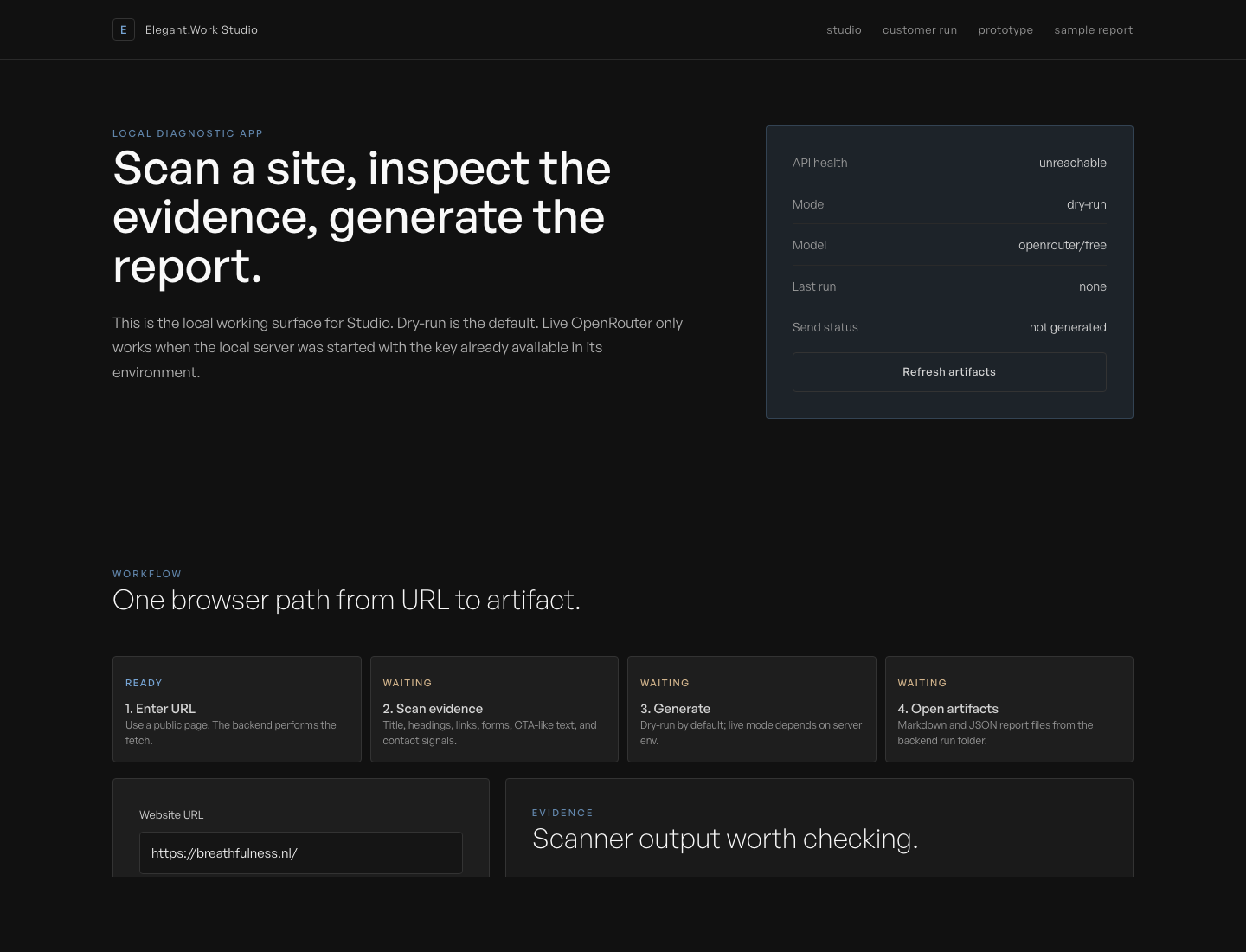
studio.elegant.work diagnostic workflow
studio.elegant.work: local working app, dry-run first.

02 / studio.elegant.work

A rough but real machine for finding the first repair.

Studio started from a boring question: why do so many founder websites feel expensive and still fail to help the person who has to decide? The app scans a public page, collects what is on the page, generates a first diagnostic, and leaves something specific enough to argue with.

That matters to me. Most AI work dies because the output feels impressive for five minutes and then nobody knows what to do with it.

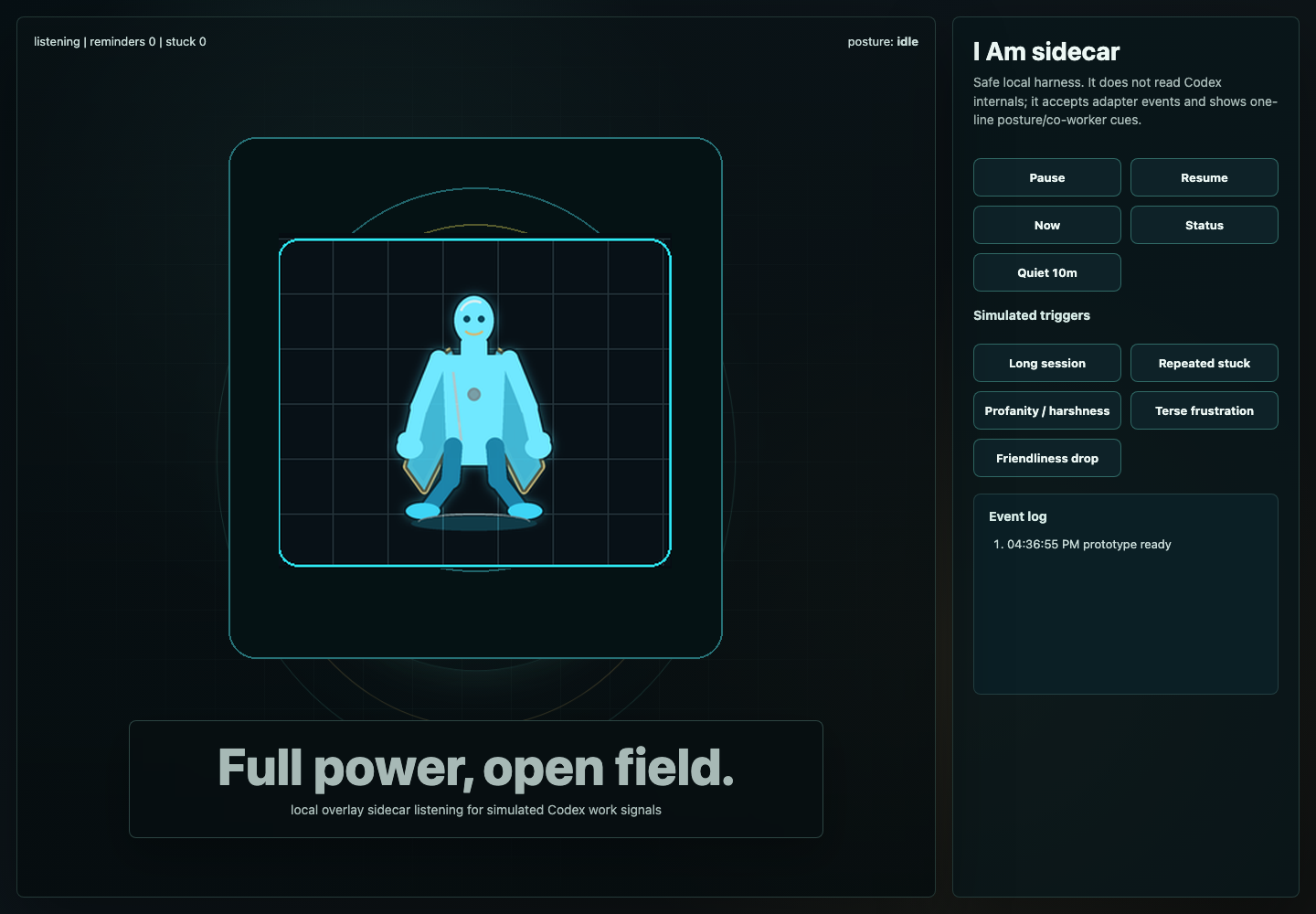
Ben / Codex Pet dark launch visual
Ben: the Codex Pet, where the pet opened a more serious product direction.

03 / Ben, the Codex Pet

The fun one. Also the one that made the inner game visible.

Ben began as a small companion for Codex work. The grown-up version is more useful: better prompts are only a small piece of the problem. The harder part is noticing when the human gets tense, oversteers, asks the machine to carry the panic, and makes the work worse.

“Come back. Then prompt.” is a tiny line. It is also a serious product thesis.

Local Codex work surface with the small Codex pet
Mimir: Notion, Codex, Claude, GBrain, and workers as a practical back office.

04 / Mimir

The back office is included because the output has to land somewhere.

Mimir is the memory and routing layer I built around my own work because otherwise AI becomes a pile of clever chats. Notion holds the operating surface. Codex builds. Claude helps with synthesis. GBrain remembers. Workers get bounded jobs.

The Norse naming is funny here for obvious reasons. I would not build an application on synchronicity. I would absolutely use it as a reason to have the conversation.

What repeats

Find the load-bearing mess. Make the first useful object.

Sense

Where is the thing actually stuck? Usually not where the polite brief says it is.

Compress

Turn too much context into a map, diagnostic, memo, page, prototype, or first decision.

Build

Use AI like staff: research, draft, code, inspect, revise, and leave an artifact behind.

Hand Over

The work is only useful when another person can pick it up without sitting in my head.

Why this is here

If Realms needs a founder wingman, this is the kind of work I mean.

The formal story lives in the application documents. This page is for the practical question: can I take a loose strategic question, a half-formed product idea, a messy public surface, or an internal operating problem and turn it into something people can inspect?

That is the job I am interested in. Less founder load. Better prepared decisions. More useful work shipped before the next meeting.

And yes, Realms / Oddin meeting Mimir / Huginn is a little too on the nose. I do not believe in omens. But I do believe in paying attention when the world makes a joke this clean.